By Saakshi Sharma
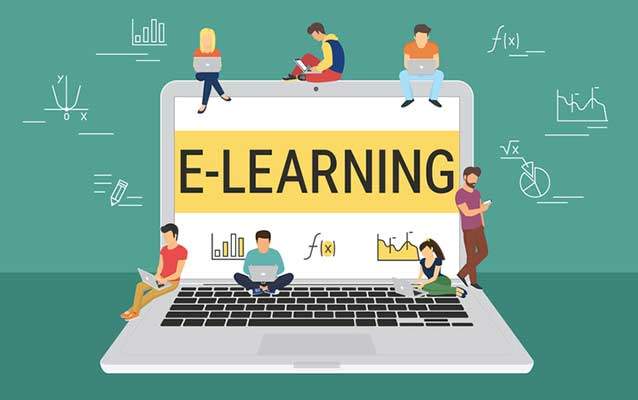
Online education is a type of educational instruction that is delivered via the internet to students using their home computers. During the last decade, online degrees and courses have become popular alternative for a wide range of nontraditional students, include those who want to continue working full-time or raising families. Most of the time, online degree programs and courses are offered via the host school’s online learning platform, although some are delivered using alternative technologies.
Indian schools have gone online to compensate the loss of studies due to the Covid 19 lockdown. Most of the schools and colleges now deliver online lectures and assignments to their students and keep their knowledge updated.
From coping with basics like internet connectivity and India’s notoriously undependable power supply to more structural issues such as curriculum and teaching methods, educators have come under tremendous stress since India’s schools began shutting down sometime in mid-March.
During social distancing and ‘stay home’ order, the numbers of ‘Webinars’ and online ‘learning’ has increased. Universities like Harvard, Stanford offered their MOOC (Massive open and online course) free to the students.
As India Today reports, Universities and online platforms have started sharing academic resources for free. It appears that there is no dearth of such online resources of academic value.
However, the difference between classroom teaching and online teaching is real. Does it pose a significant challenge to teachers or seem to be an opportunity?
Academic institutes gradually initiated online meetings and classes in March and started coping-up with the situation. But many teachers were less conversant or had apathy towards online teaching.
It is not only an opportunity for teachers to explore different methods of teaching, but also for students to utilize their potential and learn new things. Teachers have regularly updated themselves to stay with the present world.

Montgomery College provides following advantages and disadvantages of online education.
Ten Advantages of Online Courses:
1. Online courses are convenient.
2. Online courses offer flexibility.
3. Online courses bring education right to your home.
4. Online courses offer more individual attention.
5. Online courses help you meet interesting people.
6. Online courses give you real world skills.
7. Online courses promote life-long learning.
8. Online courses have financial benefits.
9. Online courses teach you to be self-disciplined.
10. Online courses connect you to the global village.
Ten Disadvantages of Online Courses:
1. Online courses require more time than on-campus classes.
2. Online courses make it easier to procrastinate.
3. Online courses require good time-management skills.
4. Online courses may create a sense of isolation.
5. Online courses allow you to be more independent.
6. Online courses require you to be an active learner.
7. Online courses don’t have an instructor hounding you to stay on task.
8. Online courses give you more freedom, perhaps, more than you can handle!
9. Online courses require that you find your own path to learning.
10. Online courses require you to be responsible for your own learning.


