Posted in Spotlight

ONLINE EDUCATION: PROS & CONS

By Saakshi Sharma

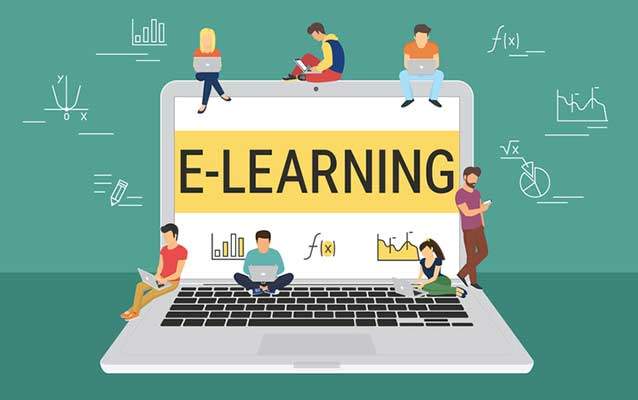
Online education is a type of educational instruction that is delivered via the internet to students using their home computers. During the last decade, online degrees and courses have become popular alternative for a wide range of nontraditional students, include those who want to continue working full-time or raising families. Most of the time, online degree programs and courses are offered via the host school’s online learning platform, although some are delivered using alternative technologies.

Indian schools have gone online to compensate the loss of studies due to the Covid 19 lockdown. Most of the schools and colleges now deliver online lectures and assignments to their students and keep their knowledge updated.
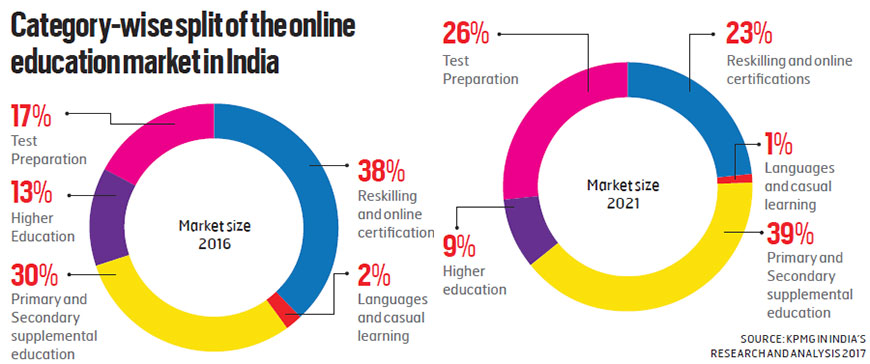
Courtesy: Business World

From coping with basics like internet connectivity and India’s notoriously undependable power supply to more structural issues such as curriculum and teaching methods, educators have come under tremendous stress since India’s schools began shutting down sometime in mid-March.

During social distancing and ‘stay home’ order, the numbers of ‘Webinars’ and online ‘learning’ has increased. Universities like Harvard, Stanford offered their MOOC (Massive open and online course) free to the students.

As India Today reports, Universities and online platforms have started sharing academic resources for free. It appears that there is no dearth of such online resources of academic value.

However, the difference between classroom teaching and online teaching is real. Does it pose a significant challenge to teachers or seem to be an opportunity?

Academic institutes gradually initiated online meetings and classes in March and started coping-up with the situation. But many teachers were less conversant or had apathy towards online teaching.

It is not only an opportunity for teachers to explore different methods of teaching, but also for students to utilize their potential and learn new things. Teachers have regularly updated themselves to stay with the present world.

Growth drivers and Challenged in online education

Montgomery College provides following advantages and disadvantages of online education.

Ten Advantages of Online Courses: 

1. Online courses are convenient.

2. Online courses offer flexibility. 

3. Online courses bring education right to your home.

4. Online courses offer more individual attention.

5. Online courses help you meet interesting people.

6. Online courses give you real world skills.

7. Online courses promote life-long learning.

8. Online courses have financial benefits.

9. Online courses teach you to be self-disciplined.

10. Online courses connect you to the global village.

Ten Disadvantages of Online Courses:

1. Online courses require more time than on-campus classes.

2. Online courses make it easier to procrastinate.

3. Online courses require good time-management skills.

4. Online courses may create a sense of isolation. 

5. Online courses allow you to be more independent.

6. Online courses require you to be an active learner.

7. Online courses don’t have an instructor hounding you to stay on task.

8. Online courses give you more freedom, perhaps, more than you can handle!

9. Online courses require that you find your own path to learning.

10. Online courses require you to be responsible for your own learning.

Posted in Rising and Shining, Spotlight

“Tribals developments in Andaman and Nicobar Islands”

By Muskan Mehndiratta

Andaman and Nicobar Islands (A&N Islands) are a union territory of India. They lie towards east of the Indian mainland in the Bay of Bengal (6º to 14º north latitudes and 92º to 94º east longitudes) and the 572 islands of the archipelago appear like emerald beads strewn in the blue sea. The average distance between the A&N Islands and Indian mainland is 1200 kilometres (km). On the west lies the Bay of Bengal that separates it from mainland India and in the east is the Andaman Sea, on the other side of which lies Thailand. The Preparis North Channel on the north and the Great Channel on the south demarcates the boundary between A&N Islands and Myanmar and Indonesia respectively. A&N Islands consists of two archipelagos, the Andaman Islands and the Nicobar Islands. The two groups are separated by the Ten Degree Channel named so because it lies at the 10º N latitude. Out of the 572 islands, only 38 islands are inhabited. The Andaman archipelago is the larger one and covers an area of 6408 square kilometre that is 78 per cent of the total area of the archipelago. The Nicobar archipelago has an area of 1840 square kilometre has that accounts for the remaining 22 per cent. Total population of A&N Islands is 380,581. Of this total Andaman Islands and Nicobar Islands account for 90 percent and 10 percent respectively. The administrative headquarter is Port Blair with a population of 0.13 million. The Nicobar District’s headquarter is at Car Nicobar.The population of A&N Islands can be divided into two groups – non-tribal population and the tribal population. The non-tribal population came to A&N Islands, when the British colonized the Andaman Islands in 1858 and later the Nicobar Islands in 1869. The non-tribal population grew rapidly after the Independence in 1947 when the “refugee” families were “resettled” under various schemes from 1947 to 1980. The non-tribal population consists of mainlanders, who were “settled” in A&N Islands over the last 158 years. They account for 92.66% of the total population. The tribal population constitute the remaining 7.34% of the total population. There are in all six tribes, four in Andaman Islands and two in Nicobar Islands. The Nicobarese, account for 97.2% of the total tribal population of A&N Islands and the rest of the five tribes account for the remaining 2.8%. The tribes of A&N Islands are scheduled tribes.

It is safe to say that the original population of the Andaman and Nicobar islands consist of aboriginal indigenous people, i.e. tribal people. They have been dwelling in the forests and jungles of the islands for centuries, lead a hunter-gatherer lifestyle, and appear to have lived in substantial isolation for thousands of years. The so called “civilians” or city/town dwellers only came later, earliest a few hundred years ago. The Andamanese and Nicobarese can be split into two broad tribal groups mainly based on their place of origin. The Andaman Islands are home to four ‘Negrito’ tribes where as – the Great Andamanese, Onge, Jarawa and Sentinelese. Where as the Nicobar Islands are home to two ‘Mongoloid’ tribes – the Shompen and Nicobarese. The ‘Negrito’ tribes are believed to have arrived in the islands from Africa up to 60,000 years ago. All are nomadic hunter-gatherers, hunting wild pig and monitor lizard, and catching fish with bows and arrows. They also collect honey, roots and berries from the forest.The ‘Mongoloid’ tribes probably came to the islands from the Malay-Burma coast several thousand years ago.

The Great Andamanese:

The great Andamanese is a collective term used for 10 different tribes that lived in most of the large islands in the Andaman. These tribes spoke different but related languages were of Negrito origin and were related by culture and geography. Until the late 18th century, the Andamanese peoples were preserved from outside influences by their fierce rejection of contacts (which included killing any shipwrecked foreigners) and by the remoteness of the islands. But after the coming of the British, things changed.When the British first tried to enter the island in around 1788-89 the Andamanese tribes, with their total population of 5000-8000, were able to resist them, resulting in the British to move to Port Conwallis and withdraw from all attempts to obtain Port Blair and Ross island for about 60 years.
However they made another attempt to capture Port Blair in 1858 and succeeded, only to be met by the soldiers of the great Andamanese tribe in 1859. The battle between the great Andamanese and the British regime is known as ‘The Aberdeen war’. The tribe organized a well planned attack on the high ranking british officials but they were betrayed by an escaped convict Dudhanth Tiwari who had lived with the tribals for several months.As a result of the betrayal, the great Andamanese suffured heavily. They were fighting with bows and arrows against guns and artillery. Most of the young male population was killed in the battle. Population dwindled as and threatened the genes for the future survival of the tribes. Imported diseases, to which the islanders had no immunity further effected population and by 1901 only 625 great Andamanese were left.
They shifted base to Straight island and that is where they live today. Today only two tribes (Jeru and Bo) remain in significant number; the other 8 have been mostly extinct. The cultural and linguistic identities of the individual tribes have largely been lost; their members now speak mostly Hindi. Although the Great Andamanese on Strait Island still obtain some of their diet from hunting, fishing and gathering, they now consume rice and other Indian food, and are dependent on support by the Indian government for survival. They now practice some agriculture, and have established some poultry farms.

Onge:

Onges are one of the most primitive tribes in India. They belong to the Negrito racial stock and they have been mainly seen near the Dugong creek in Little Andaman. They are dependent on the food provided by nature and are a semi-nomadic tribe.
The onge population fell post british colonization from 672 in 1986 to 92 in 1901 but has remained stable since. At present the Onge population have opened up to the locals in the island. They have now experienced the impact of outsiders, as efforts at befriending them have proved successful. They have been provided with pucca houses, food, clothes, medicine etc. by the Administration. They eat turtle, fish, roots and jack fruits etc. They have developed artistry and crafts. The Onges can make canoes. A primary school has also been functioning at the Dugong Creek settlement of Onges. The population of this tribe is stable and is at present 110. A major drawback is the addiction of the Deugong mails to alcohol. 6 deaths have been reported because of this already. Enquiries into ways of controlling this addiction are taking place.

Jarawa:

With a population between 250 to 400, the Jarawa tribe is one of the largest tribes in Andaman islands. For centuries this tribe has shunned all interaction with outsiders and therefore there name means “The hostile ones” or “people of the earth”.
The Jarawa are still at the primitive stage of life on earth. They entirely depend upon forest and sea for food. Wild boar and monitor lizard are consumed. Various kinds of fruit , honey and tubers are parts of their diet too. The jarawas of both sexes go complete naked. However some ornaments made with shells and palm leaves are worn by them but these are not in the sense to cover their nudity. This tribe has lived in the southeast part of Andaman but after the British regime they shifted to the western region of the island. They have forever been hunter gatherers in the true sense however things have changed since the 1990’s specially after the building of the old trunk road. The great Andaman trunk road is a 360 km long road that connects Port Blair to the western regions of Andaman. Though it proves beneficial for tourism and business, it has proved life-threatening for the Jarawas. This trunk road cuts through the jungles that are home to the Jarawa community.

Sentinelese:

The Sentinelese people are said to be so hostile that their home has been named the ‘hardest place to visit’ in the world. They inhabit the North Sentinel island, and are the only remaining tribe in the Andamans to still maintain their isolation from the rest of the world. Nobody knows exactly how they look, the population or how they live. Since 1967, the indian governments with the help of anthropologists have tried to make contact with the tribe. They tried giving gifts of food, coconuts, etc but they were always met with hostility. The tribe showers arrows and stones at whoever comes near the island. In 2006, 2 fishermen who were fishing illegally near the island were shot by sentinilese archers. The helicopters which was sent to retrieve the bodies was also greeted by arrows. After the tsunami the government again tried to help them by sending a few employees to the island with gifts but again, the same response followed. Presently the policy of the indian government is to leave the Sentinilese alone. Any access to North Sentinel island is strictly forbidden.

Posted in Social Issues

Tragedy with a history: Gas leak incidents in India

By Padma Dolma

Tragedy…

Picture courtesy: Pinterest India

There is a saying in Tibetan, “Tragedy should be utilized as a source of strength.” No matter what sort of difficulties, how painful experience is, if we lose our hope, that’s our real disaster.” The 14th Dalia Lama

Picture courtesy : One India

When we shouldn’t lose hope means that we should make sure the same tragic things does not happens again.

Didn’t we learned a lesson 35 years ago? And yet, here we are with a repeated history. The same incident took place 35 years ago in the state Madhya Pradesh, Bhopal. Though Bhopal was much worse than Vizag. The death and the aftermath was so horrific that for weeks people had suffered diseases related to the gas. Both the tragedies were same in a way, both happened due to the negligence of the company’s authorities. Slack management and deferred maintenance which in result created a situation where routine pipe maintenance caused a backflow of water into a MIC tank, triggering the disaster.

If such tragedies keeps on happening we don’t know how many toxicity one country can take, so this happening is another lesson for the whole old and promising nature of the Government.

Bhopal and Vizag were not so different from each other, the whole situation was covered up with an excuse of being mistaken or being blamed on a worker being irresponsible and never even once mentioning their own fault of being irresponsible, siting in a comfortable chair of an AC room they decide the problems and solutions of the poor people who becomes the victim of such hazardous incidents. The atleast 50 days untouched machines were being used suddenly without any inspection resulting the death of 11 people including elderly, women and infants.

Even with the compensation the grief and the bigger loss of a person’s life cannot be replace or compensate with anything but a justice can bring relief to the families who have lossed their loved ones. Seeking for justice and looking forward to a better tomorrow without any tragic incidents and without a history being repeated incidents would be a better India to live in. The hope of seeing a better India.

Posted in Social Issues, Spotlight

The Rape Culture In India

By Simran Kaur

Nirbhya Rape Case, Unnao Rape case, Mumbai Rape case, Ranaghat Rape case and numerous many more. Many assault cases in India and other nations go unreported, just because of open dissent and media consideration has expanded the readiness to report the cases.

It’s sad, but genuine that ‘RAPE’ is the fourth most normal wrongdoing against females in India. It’s a severe truth that 80% of the instances of assault cases are done by somebody known to the person in question. It’s hard to confide in anyone in time of downfall, whether he’s your uncle, your driver, your worker or any other person.

Pitilessness by spouse or his family members represents 27.9 percent of the violations against ladies.

Lion’s share of the cases are recorded under this IPC segment revealing insight into the high predominance of abusive behavior at home in the country. Most assaults go unreported on the grounds that the assault casualties dread reprisal and embarrassment. India is being disparaged in light of the fact that numerous cases are not reported,even however casualties are expanding step by step.

Report of assault cases in 2017 –

In excess of 32,500 assault cases were enlisted with the police in 2017. In any case, Indian courts discarded just 18,300 cases identified with assault that year.

The National Crime Records Bureau (NCRB) has discharged the yearly wrongdoing in India report 2017 on October 28,2017 – Madhya pradesh tops the outline for the most number of violations against ladies, at 5,562 cases. Uttar Pradesh is underdog to MP with in number of instances of assault announced. Assault by realized people despite everything establishes a huge level of the considerable number of cases reported. Out of 32,559 revealed cases, in 93.1 percent cases the denounced were known to the victims.  The report features that 16,591 assault bodies of evidence were accounted for against family companions, businesses, neighbors or other known people and in 10,553 cases, the blamed were companions, online companions, live-in accomplices or isolated spouses of the people in question.

In the event that we talk about state insightful, at that point Arunachal Pradesh, Goa, Himachal Pradesh, Manipur, Sikkim, Tripura, Nagaland can be viewed as modestly more secure than different states.

Report of Rape cases in 2018 –

Very nearly 34,000 assault cases were accounted for in 2018. It’s extremely stunning and unsavory that one lady detailed an assault like clockwork of the normal. As per (NCRB) Annual Report 85% prompted charges.

Report of Rape cases in 2019 –

Six instances of assault and eight instances of attack were recorded each day on a normal in the national capital this year till July 15, as indicated by the Delhi Police measurements, which feature an upsetting circumstance.

Through and through, 1,176 instances of assault were enrolled till July 15 this year, the information uncovers. The figures are exceptionally upsetting as these features the proceeded with helplessness of ladies in the national capital even 7 years after the abhorrent assault and murder of a 23-year-old medico here, which had made an across the nation shock and prompted promises by the political and regulatory initiative to address the issue with all reality.

The person in question, presently known as ‘Nirbhaya’, was assaulted by six men in a moving transport in a south Delhi territory while she was getting back with a male companion on December 16, 2012. In the wake of outrage and shock over it, the laws against assault and attack were reinforced however the circumstance stays unaltered.

“Going after work is a bad dream for ladies. I see no police officer sent at detached spots. While getting back from work out in the open vehicle, there are such a significant number of dull stretches I need to pass every day. I continue talking over telephone to either my companions or relatives with the goal that they would know whether anything untoward happened,” said 30-year-old Shweta Mehta, an architect who works in Gurugram and lives in Jangpura.

As indicated by the police, in the vast majority of the assault cases, they were known to the person in question.

All through most of mankind’s history, men would in general view ladies as mediocre and of lower request Raised in talk, squashed truth be told, ladies have, for a really long time, been made survivor of men’s numerous domineering savageries and shameful acts. Causing licentious calamity is one of the most belittling gadgets men have embraced to cover and oppress ladies and, in this manner, support their own predominance.

Posted in Social Issues, Spotlight

Medical Termination Of Pregnancy (Amendment) Bill 2020

By Saakshi Sharma

The proposed amendments in the Medical Termination of Pregnancy Bill aim to expand women’s access to safe and legal abortion services on therapeutic, eugenic, social and humanitarian grounds.

The Medical Termination of Pregnancy (Amendment) Bill, 2020 was passed by the Lok Sabha on March 17, 2020. The bill seeks to amend the Medical Termination of Pregnancy Act, 1971 and increase the upper limit of legal abortions to 24 weeks for special categories of women. 

The bill was passed in the lower house of the Parliament through a voice vote. Union Health Minister Harsh Vardhan stated that the proposed bill seeks termination of pregnancy in cases involving victims of incest, rape survivors, minor girls, differently-abled girls or in case of a pregnancy that has substantial foetal abnormalities.

SIGNIFICANCE:

With the passage of time and advancement of medical technology for safe abortion, there is a scope for increasing upper gestational limit for terminating pregnancies especially for vulnerable women and for pregnancies with substantial foetal anomalies detected late in pregnancy.

Further, there is also a need for increasing access of women to legal and safe abortion service in order to reduce maternal mortality and morbidity caused by unsafe abortion and its complications.

Considering the need and demand for increased gestational limit under certain specified conditions and to ensure safety and well-being of women, it is proposed to amend the said Act.

Before 1971, abortion was criminalized under Section 312 of the Indian Penal Code, 1860, describing it as intentionally ‘causing miscarriage’.

The Medical Termination of Pregnancy (Amendment) Bill, 2020, provides for,—

(a) requirement of opinion of one registered medical practitioner for termination of pregnancy up to twenty weeks of gestation;

(b) requirement of opinion of two registered medical practitioners for termination of pregnancy of twenty to twenty-four weeks of gestation;

(c) enhancing the upper gestation limit from twenty to twenty-four weeks for such category of woman as may be prescribed by rules in this behalf;

(d) non applicability of the provisions relating to the length of pregnancy in cases where the termination of pregnancy is necessitated by the diagnosis of any of the substantial foetal abnormalities diagnosed by a Medical Board;

(e) protection of privacy of a woman whose pregnancy has been terminated.

FEATURES:

  • The Bill seeks to amend Medical Termination of Pregnancy (MTP) Act, 1971.
  • The Bill proposes the requirement of the opinion of one registered medical practitioner (instead of two or more) for termination of pregnancy up to 20 weeks of gestation (foetal development period from the time of conception until birth).
  • It introduces the requirement of the opinion of two registered medical practitioners for termination of pregnancy of 20-24 weeks of gestation.
  • It has also enhanced the gestation limit for ‘special categories’ of women which includes survivors of rape, victims of incest and other vulnerable women like differently-abled women and minors.
  • It also states that the “name and other particulars of a woman whose pregnancy has been terminated shall not be revealed”, except to a person authorised in any law that is currently in force.

Picture Courtesy: @JagranJosh.com

Posted in Featured Celebrities, Spotlight

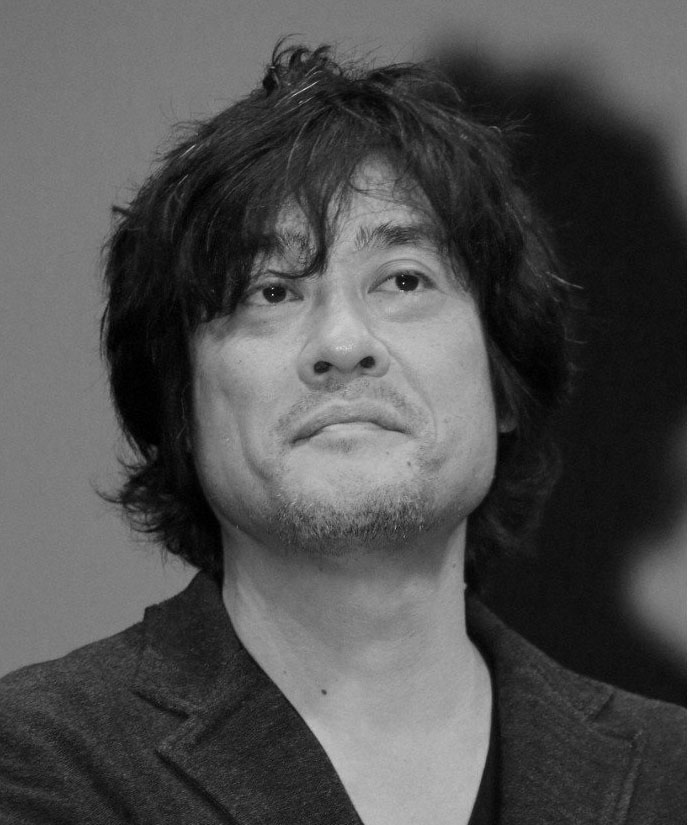
Keiji Fujiwara

By Simran Kaur

Shinchan, a japanese show , helps us to forget our stress,tensions and anger and laugh out loud. The show is about a five year old naughty but cute boy named Shinchan Nohara, who does weird activities and troubles his family and friends.I can relate my mom with shin chan’s mom , Infact i feel like i am watching my childhood . This cartoon is a great escape from the real life. Sometimes life is so stressful that we need a escape. Shin Chan is the best show i’ve ever seen . It’s closely related to the daily life of a common man. It has satires on life, comedy and parody. It can be viewed by all age groups.

Voice Actor of Crayon Shin Chan’s Father Tragically Passes Away At 55 Years of age. ( Keiji Fujiwara ) . The show has now been dubbed in 30 languages, which aired in 45 countries, has over 1007 episodes and 26 full-length movies. More than 275 million copies of the manga have been sold worldwide in 20 years. A Hindi dub of the anime started airing in India on Hungama TV on June 19, 2006, Later in Tamil dub and Telugu dub.

There were complaints from parents over the main character’s behavior and the attitudes exhibited towards elders on the show, both of which were seen as a negative influence on children.The series was banned in October 2008 by Ministry of Information and Broadcasting ( India )on account of heavy nudity.

Before the ban, the Hindi version of Crayon Shin-chan gained up to 60% of the channel’s market share. After many requests from fans, the Indian Censor boards, heavily edited the content and revived the Indian dub on March 27, 2009.The jokes were edited to be more family-friendly, and all mentions of alcohol were replaced by mentions of juice.

Scenes that have been cut include instances of Shin-chan performing either the Mr. Elephant dance or the  butt-shaking  dance, and instances of Nene’s mother beating up a stuffed toy in anger. Hiroshi Nohara , is a loving father to his two children, and ultimately a devoted husband. While he is the family breadwinner, he hands the reins of finance over to his wife, who maintains a totalitarian level of control on family spending.

He is a stereotypical Japanese salaryman, working eight-hour days, enduring overstuffed trains, enjoying the occasional nightlife, and giving every bit of his take home pay to his wife every month. He is a quiet, reasonable person, who is almost always invited by his boss or a worker, to drink beers, were he almost always gets drunk.He used to smoke a lot, when Misae was pregnant by Himawari, he quit smoking as a favor for her.

Fujiwara , was also famously the Japanese voice actor who dubbed Robert Downey Jr’s voice as Iron Man/Tony Stark. Having fought a long battle with cancer, Mr Fujiwara was well known within the Japanese animation industry for not only lending his voice in the popular Japanese cartoon, but for voicing many other popular characters in Japanese animation too .

In August 2016, Air Agency announced that he was going on hiatus in order to undergo medical treatment for a then-unspecified illness.He officially resumed work in June 2017. Fujiwara died of cancer on April 12, 2020.

Posted in Covid 19 Updates, virtually rising

MY LIFE IN THE AGE OF CORONAVIRUS

By- Samyukta Narayanan

undefined

It’s now the 19th day of lockdown since the Day the Earth Stood Still, life at home is falling into something resembling a routine, sporting events and travel plans are being called off, while hand sanitizer is flying off the shelves.

It is somewhat challenging to channel either of those things during a global pandemic in which you are also trying to stay mentally and physically healthy, and try as best you can to keep optimistic while the world around you seems so utterly dark.

My day starts with waking up at 12 or 12:30 pm I freshen up and eat my breakfast then I start with watching something on Netflix it could be a movie or any series then if I am feeling sleepy I sleep or I continue using Netflix or YouTube. Then about 2 or 2:30 pm I eat lunch and again after about an hour I go back to sleep I love sleeping it’s like sleeping is a meditation for me since this pandemic I’m sleeping a lot. Then I work out a for like 30 mins to stay fit and healthy eat some fruits or drink some shakes then do my assignments. This is my daily routine.

At this period of time, it’s really difficult to be optimistic but we have to. I sometimes go to the market to buy some stuff and it feels like I’m some kind of daredevil going out like this alone outside where nobody’s out like as usual. I really feel sad because I can’t go outside to play badminton in the evening before this pandemic I used to play badminton daily and I really miss it.

Sometimes I feel really trapped in my house because I can’t go outside. Every person is going through this phase. As we got to stay home police stations, hospital, journalist’s and reports didn’t get that they are still going outside and doing their jobs to keeps us safe and keeping us updated hats off to all of them who are still working.

This is a period in which we are getting a lot of time to self-analyse, to start doing something like a hobby as I’m seeing in every Instagram stories that everyone has become a chef making momo, cakes etc or you can do something that you were doing when you were in school and after completing your school you don’t have that much time now is the time when you can change something about yourself this is a precious time so use it properly. I hope everything will be fine soon.

Posted in Rising Stars, Spotlight, virtually rising

Virtual talent

By Padma Dolma

Indeed it is hard for the ones who goes outside almost everyday and hardly stays at home, with a situation like COVID-19 everyone must stay at their homes. And people like Acoustic Ladakh has created a platform for those who are blessed with vocal and instrumental talents. Acoustic Ladakh is a Leh based guitar shop. They have created a platform on Instagram for the young talented people with vocal and instrumental skills to participate and win prizes like a guitar, a ukulele and a full life service for them & etc https://instagram.com/acoustiveladakh?igshid=odw392i4e4ua

Making the students of Ladakh who are stuck in their education cities like Jammu, Delhi, Chandigarh, Bangluru,etc fascinating and making their quarantine more fun without their families around to stick together. This initiative is a great move to keeping the quarantine spirit filled with positive attitude and making them occupied and also making them not wanting to go outside as well to keep themselves safe from the virus.

Image by IG account: Acoustic Ladakh
Posted in Social Issues

Quarantine = Panic Buying

By Padma Dolma

Where Corona virus had reached at a height where we called it a ‘Pendamic’ and super nation like America itself had fallen for it with out any cure. Meanwhile India announcing the lockdown had created a panic wave over the citizens which resulting a huge mass doing panic buying.

BUT THE QUESTION RISES, SHOULD WE REALLY BE DOING PANIC BUYING IN THIS SITUATION?

Answer is a clearly ‘NO’

WHY?

The reason is as simple as it looks

For example : In a middle man house there are 2 people living and during a quarantine this house buys groceries for almost 8 people and if every middle man house does this when there is a lockdown, the demand goes pitched hieght and the supply is not enough for everyone so some gets and some doesn’t.

Image by Padma Dolma

And in a country like India there are more below poverty line families then middle man families, so the BPL people suffers for every grain to fill their stomachs. There are people who suffer daily with the lockdown and the lockdown had made them jobless, shelterless and an empty stomach with no money to buy food or any medical backup. With the schools, colleges, offices and industries closed they don’t even have any reason to stay at the places where they came to work for and already facing difficulties of being shelterless, joblessness they are traveling by foot to reach their houses. With the people buying in a bulk in order to keep themselves away from ranning out of groceries they do a lot of panic buying and it’s really not necessary when the government is keeping a lenient lockdown.

Posted in Social Issues, Spotlight

Manic with ways out: Importance of Mental Health

By Padma Dolma

Image Courtesy: @GettyImages

A very common disorder Bipolar disorder also known as Manic Depression a disorder associated with episodes of mood swings ranging from depressive lows to manic highs.

Anyone can suffer through this disorder and the exact cause for it is not yet known but it is believed that a combination of genetics, environment and altered brain structure and chemistry can be the reason along with abuse, stress, a significant lost or a traumatic event can cause this disorder.

Experts believe bipolar disorder is partly caused by underlying problem with specific brain circuits and the functioning of brain chemicals called neurotransmitters https://www.webmd.com/biolardisorder/guide/bipolar-disorder-cause

While this disorder is being found in every fourth person in India mental health care is being a concerned topic, there are celebrities facing the same disorder and dealing it with their daily life and openly confessing and fighting against their social status in the society with such an disorder.

Having openly confessed is a huge courageous thing one can do along with that some celebrities are working their best to deal with it while others like Halsey and Bebe they are helping out their fans by creating new encouraging songs to help others dealing with such disorders.

Manic symptoms:

  1. Insomnia
  2. Highly mood swings
  3. Restlessness
  4. Non-stop speaking
  5. Hyper activity
  6. Aggressiveness or increase in irritability
  7. Trouble in concentrating
  8. Low appetite or high appetite

During this situation one needs someone to rely on, most of the mental breakdowns are caused by loneliness and bullying. In that case its human nature to fell depressed and the felling of differentiation leads to aggression and one feels left out. During episodes of depression and mood swings one can be treated properly and can be stabilized by the support of the family, friend, love ones.

Supporting the manic:

1. Spend some time with them

2. Make them fell accepted

3. Become more understanding instead of getting irritated from their behavior

4. Make them fell indifferent

5. Comfort them with your love and honesty

6. Ask for medical help

7. Convince them to get treatment

8. Prepare yourself in case destructive behaviors happens

9. Make yourself prepared in case of crisis

10. Monitor their moods

11. Keep yourself updated with the medicines.

Ashley Nicolette Franipane, 25 years old, professionally known as Halsey is an American singer and song writer. She is an open bisexual since 2015. She had recently released her new album called “MANIC” after her confession on having Bipolar disorder, her new art which is about her life along with the depression seasons she had been through, written from her own perspective , it’s her third album which is her way out to fight against the lonely self- awareness into a kind of strength. She was diagnosed with this mental disorder at the age of 17 and her hideaway from the disorder had been the music she had been producing since. https://www.newsweek.com/halsey-bipolar-disorder-mental-health-music


Bebe Rexha had the same disorder and she is an open vocal supporter of LGBTQ community, “I’m bipolar and I’m not ashamed anymore. That is all. (Crying my eyes out)”, she tweeted this on tweeter along with a series of tweets she revealed her heart out. She’d shared her story of being a bipolar with the SELF magazine in an interview. https://www.self.com/story/bebe-rexha