
By Simran Kaur
Advantages of Online Education..
By Simran Kaur
Advantages of Online Education..
By Simran Kaur

Sometime in the second week of March, state governments across the country began shutting down schools and colleges temporarily as a measure to contain the spread of the novel coronavirus. It’s close to a month and there is no certainty when they will reopen. This is a crucial time for the education sector board examinations, nursery school admissions, entrance tests of various universities and competitive examinations, among others, are all held during this period. As the days pass by with no immediate solution to stop the outbreak of Covid-19, school and university closures will not only have a short-term impact on the continuity of learning for more than 285 million young learners in India but also engender far reaching economic and societal consequences.
The structure of schooling and learning, including teaching and assessment methodologies, was the first to be affected by these closures. Only a handful of private schools could adopt online teaching methods. Their low-income private and government school counterparts, on the other hand, have completely shut down for not having access to e-learning solutions. The students, in addition to the missed opportunities for learning, no longer have access to healthy meals during this time and are subject to economic and social stress.
According to a latest report, the Indian e-learning market size was USD247 million, comprising 1.6 million users in 2016. It is expected witness an 8X growth to reach USD1.96 billion and the current user base will grow at 44 percent CAGR to 9.6 million users by 2021.
In fact, India’s e-learning market is the second largest after the US which is forecasted to grow by 15.64 percent and exceed $48 billion by 2020. Online education cost low , there has been a 175 % rise in the average annual private expenditure for general education (primary level to post graduation and above) between 2008 and 2014. During the same period, the annual cost of professional and technical education has increased by 96%. Parents spend Rs36,000 on secondary education in government school for six years, and Rs3,96,000 in private schools. If the kids are studying in boarding, the cost is close to Rs 18 lakhs. The graduation and post graduation degrees in engineering, medicine, science and commerce are unusually expensive. The aim of the government is to raise its current gross enrolment ratio to 30% by 2020. India will have the world’s largest tertiary-age population and second largest graduate talent pipeline globally by the end of 2020. However, the existing educational infrastructure is not equipped to meet the additional capacity. The e-learning can supplement the conventional model, and bridge the gap to a considerable extent.
By Padma Dolma
The rising numbers of the misinterpreted information is however is also an act of human being to create money, to create disputes, to create chaos out of nowhere but it still there, we never know when will someone writes a fake story about you and you don’t even know of it, but only until the whole world know of it and after that your whole life, that you had been cherishing will go puff only in a minute.
://www.bbc.com/news/blogs-trending-37846860
Why fake news?
The research article of BBC , The rise and the rise of fake news 2016 writes that some people does it for money as it creates millions of money from selling fake news and baiting people for their own income.
As for the people who are into this business are making money out of it and common people being their prey the predator never leaves evidence that that is a fake news and the prey fall into their trap as they reads it and forward it to more readers and they forward it to more, this chain never ends as the sharing of the story, making it the trend of the era.
The seriousness of the circumstances are never measured the creator neither the reader does. Thus, like this the fake story flourishes and flood the internet with it.
How to stop it?
There are some companies like Facebook, Whatt’s app which are trying their best to make the sharing less and less damage could happen. But how individually we can stop it on our own grounds?
Conclusion.
The business world doesn’t seems to understand the ethics these days but the people out there hurting from their business also have the right to live a life without any fake news, money seems to had them blinded. So never believe everything without crosschecking.
By Padma Dolma
Listen to the most recent episode of my podcast: Virus: FAKE NEWS https://anchor.fm/padma-dolma/episodes/Virus-FAKE-NEWS-efc4o9
By Simran Kaur
The positive and negative impacts of online education.
By Muskan Mehndiratta

The novel virus on the streets is not merely a joke. It has not only shaken the economy majorly but has majorly impacted the education of students around the globe. It is not a joke, it has already caused enough destruction, that leaders around the world have halted all non-essential industries on hold and forced people to stay indoors. For the leaders of all nations, therefore, the health of their people is of primary concern. The COVID-19 resulted in schools being shut down all over the world. Overall, more than 1.2 billion children are out of the classroom. As a result, education has changed significantly, with a noticeable rise in e-learning taking place online and on digital platforms. Though countries are at various points in their COVID-19 infection rates, there are currently more than 1.2 billion children worldwide affected by the pandemic in 186 countries. Although this is of great inconvenience to a lot of people, it has triggered a sudden increase in demand for internet learning, or we can say online education. Correspondingly, educational institutions (universities and schools) are offering online courses and a few online courses – online companies are also providing free online classes to help distinguish the effect of school and schools being shut down for the time being.
Now the question arises that Online Education, a Boon or Bane?
In this lockdown period, information technology has emerged as a superhero. We are all under house arrest, but we are still connected to the outside world. Citizens are working from home, sharing knowledge and stories, learning new recipes and DIY ideas, outdoor workouts, virtual indoor marathons and, last but not least, youngsters getting their online classes. Initially, I was not in favor of these online courses, but slowly I started to like it because it was not that boring of which i was thinking about, and it was really enjoyable, plus gained a good experience. With the uncertainty of the lockdown period , people became serious about online classes and began to see it as the future of our education system. We are coming out of our comfort zone for the first time. We have met people from various cultures and cuisines. Because of this lockdown, people learn to do stuff on their own. They make new friends, new games, new opportunities for themselves. They are learning to work as a team. They are widening their boundaries. Students across India use every technical resource at their fingertips to pursue their studies. Some of the popular tech tools that enable online learning through audio and video links include Zoom, Skype, Whatsapp, Cisco Webex, and Microsoft Teams, etc..
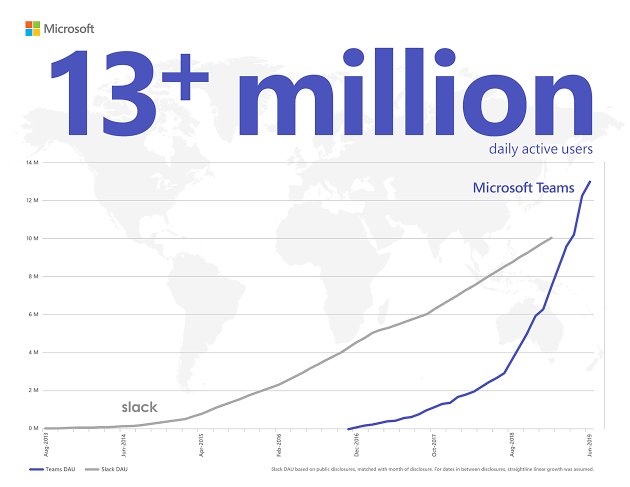
This is a statestical data of Microsoft team in which around 13 million people are daily active users.
Live classes on such platforms ensure that in the midst of the coronavirus pandemic education is not obstructed. Given the audio and video capabilities that the tech devices provide, most people agree that the classroom environment and the human to human interaction can never be replaced by any technology. My personal experience with online learning has its ups and downs. A positive feature is the mute button, which helps to dissolve all the background noise and allows you to listen more clearly. Despite advances in technology, multiple disconnections would occur in an online class, forcing students to say Mam you are not audible. As online platforms seek virtual learning sessions, Lack of proximity to the graduates. Personally, I like the fun group study sessions with friends as they help us to effectively share ideas and create an emotional bond that will last a lifetime between us.
Is learning online as effective?

There is evidence that learning online can be more efficient in a number of ways for those who do have access to the correct technology. Many research indicates that on average, when studying online , students retain 25-60% more content compared to only 8-10% in a classroom. This is also due to the students being able to learn online faster e-learning takes 40-60 percent less time to learn than in a typical classroom environment as students can learn at their own speed, go back and re-read, skipping or speeding through concepts as they want. Despite the lockdown, complexities of the Covid-19 it remains to be seen how long online learning will replace the actual teaching in the classroom.
Online learning has brought New life and potential outcomes, never again is gaining learning from a classroom the exception, yet rather it is turning into a student focused standard numerous instructive models strive to repeat. With the presentation of the Internet with in recent years new measurements of learning have surfaced as elective types of training that has brought online learning stages offered in advanced education out of the four dividers of the study hall into the domain of the internet. The Convenience of online training takes into consideration quick access to teachers and friends in the digital class. The attribute of accommodation is citied as the premier advantage to online education. Encouraging on the online by means of the Internet can take numerous structures going from site pages mailing rundown to course Management frameworks, For example, blackboard The Hybrid and mixed courses is a piece of online training. This sort of offering addresses the issue of those students who lean toward an eye to eye design just as the understudies who incline toward an online organization. Numerous colleges and universities facilitating on the online classes, as student population will in general increment. In blend with lower withdrawl rates of online students, colleges saw internet learning as exceptionally financially effective and productive through many avenues never thought possible online learning appeared. As more courses are being offered online enrollment increments, accordingly carrying more cash to the main concern for the college. Online projects have no expense for instructional offices, transportation and related staff. The estimation of online instruction also increase while considering the wide scope of accessible online courses.

Following a time of advancement and improvement, online learning system have generally been incorporated into routine training tasks and practices. As the advances have developed, center has moved past appropriation and arrangement contemplations towards those of convenience, administration and improvement. Just as asking how training can make us from online innovation, it has gotten possible, and maybe significantly progressively proper, to ask how the innovation may best be utilized in the administration of educating and learning.
While much work was led in Australia, the vigorously on and talks legitimately to discussion occurring in U.S.A, UK and others parts of the world. While student commitment is characterized in imported manners by the conditions and societies in which it occurs it looks for move past such limited contemplations and spotlight rather on progressively nonexclusive instructive wonders. The majority of the recent growth in online enrollments has come from the schools that are the most engaged in online education as they add new courses and programs and grow their existing offerings. Fully Engaged and Engaged institutions are larger and more established, so they are in a better position to ‘scale up’ their online offerings and contribute a larger proportion to overall growth, whereas Non-Strategic Online institutions are more likely to start small if they do change their strategic approach, thus they will contribute a smaller proportion to overall growth.
BY (RAHUL BAGHEL)
By Padma Dolma
By- Samyukta Narayanan

False and distorted news material isn’t exactly a new thing. It has been part of a media history long before social media, since the invention of the printing press. It is what sold the tabloids before.
Fake news can spread through word of mouth in traditional media and recently through digital forms of communication such as edited videos, memes, verified ads and social media propagated rumors. The damage caused due to fake news on social media has increased due to the growth of internet.
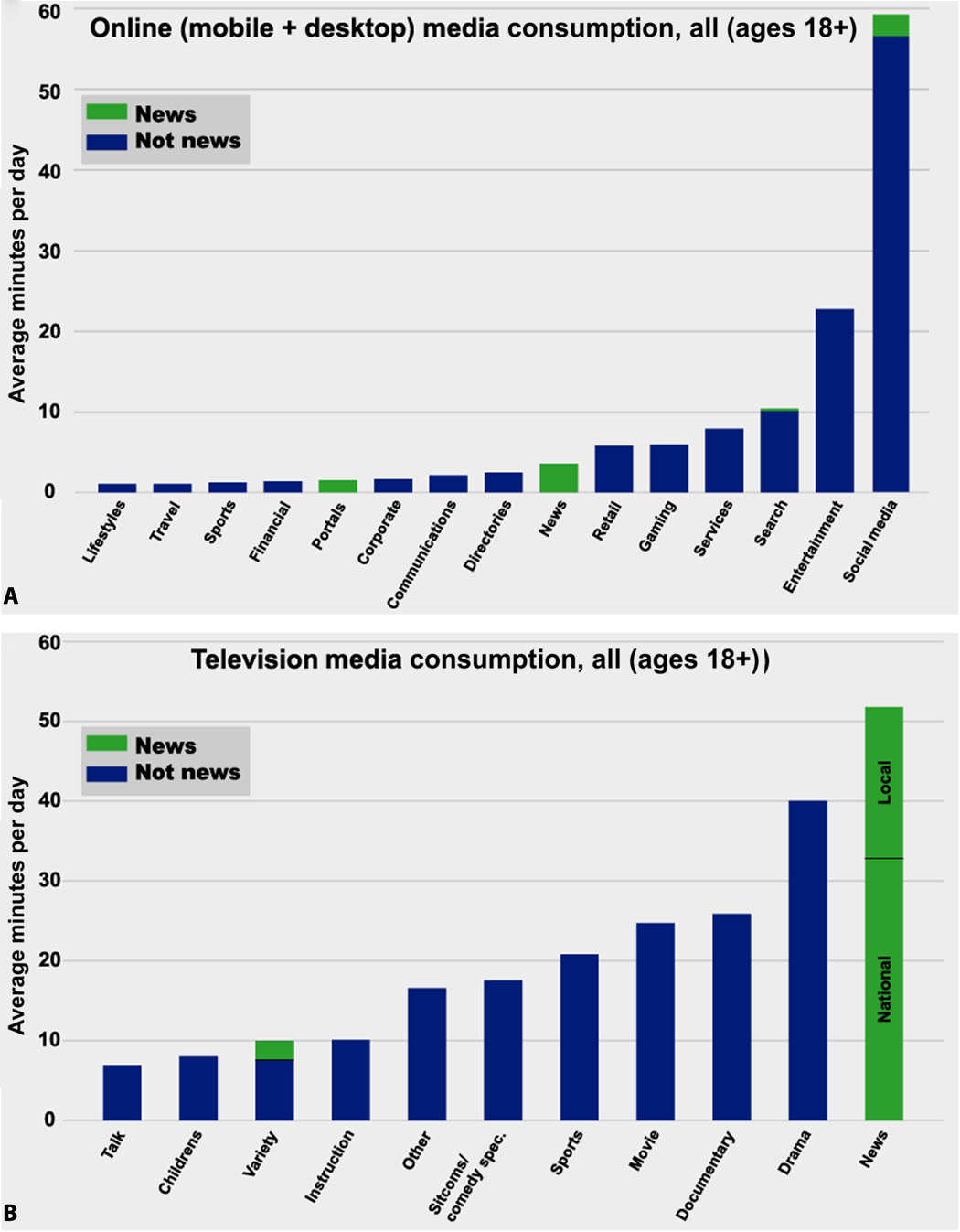
Worldwide in India, it has rised from 137 billion internet users in 2012 to over 600 million in 2019 one of the main problem is the receivers believing anything send to them over the platform due to lack of awareness.
Fake news was very prevalent during the 2019 Indian general election. Misinformation was prevalent at all the level of society during buildups of the election. The elections were called by some as “India’s first WhatsApp election”,with WhatsApp being used by many as a tool of propaganda. Facebook went on to remove nearly 1 million access a day, including one spreading misinformation and fake news before the elections.
Around 5000 social media handles from Pakistan were part of actively spreading fake news and its information on CAA, some using “deep fake videos” in the process 15,000 social media mediators worked over time to identify fake news related to CAA from platforms such as Facebook, tiktok, Twitter and helo.

India has the largest number of social media users in the world across platforms such as Facebook, YouTube, Instagram, WhatsApp, share chat and tiktok. Fake news, rumours and hate speech spread through social media have been connected to various incident of mob attacks and lynching in the country.
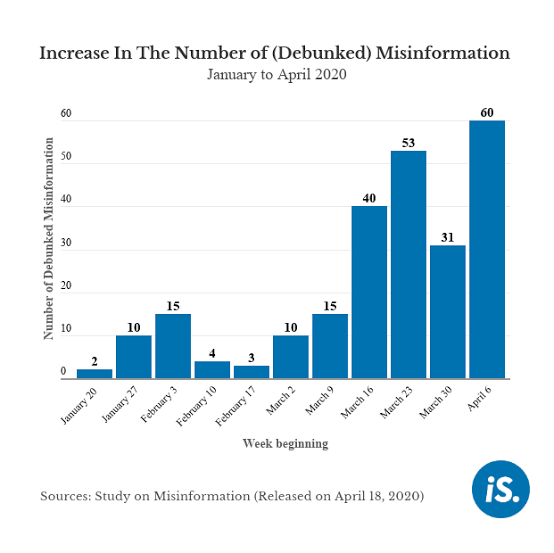
The government in its adversary said that coronavirus outbreak has become a global concern and it has been reported that there is a trend of circulation of misinformation and sharing anonymous data related to virus creating panic among the public.
It urged social media platform to initiate awareness campaigns on the platforms for users to not upload a circulate fake news concerning coronavirus.
WhatsApp has been dealing with fake news and hate speech for a long time, has launched a chat box in partnership with health ministry for disseminating authentic information on covid-19. The app has a feature limiting message forwarding to one chat at a time. The limit kicks in once a message has been forwarded on the platform five times, after which a message can be forwarded to either one WhatsApp group or an individual at a time.


 Gyann Loaded