
By- Samyukta Narayanan
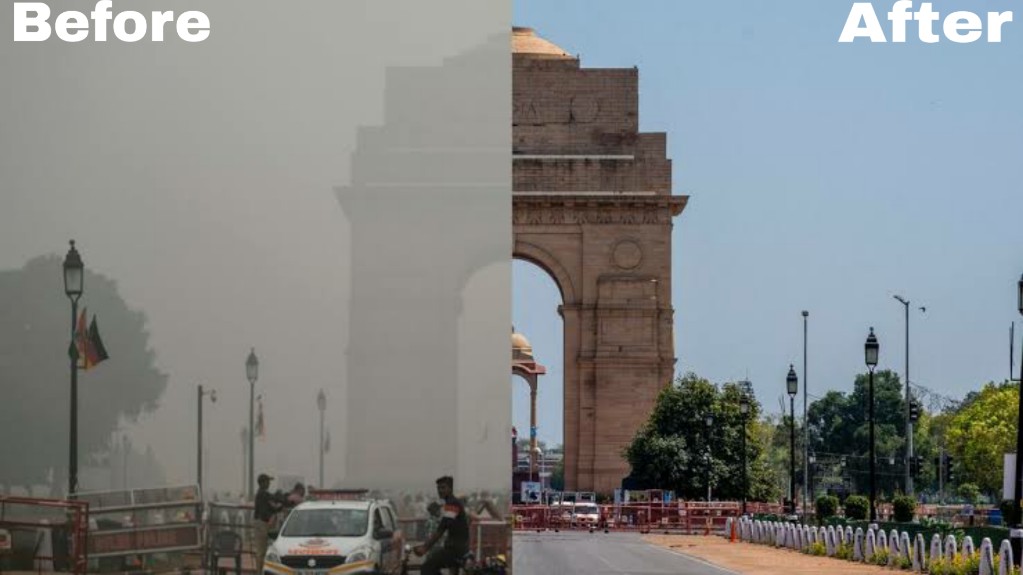
As y’all know the pollution level has been very hazardous in the previous years, many breathing difficulties have been there for the people living in Delhi NCR. In Delhi, poor quality air irreversibly damages the lungs of 2.2 million or 50 per cent of all children. People were suffering from sore throats, headaches and this poor air quality can also lower the lung capacity. Mostly the infants, small kids and the senior citizens we’re prone to get diseases due to the polluted air.
After winning the Delhi election 2016 Arvind Kejriwal of Aam Aadmi Party(AAP) decided to bring the odd-even rule to improve the air quality of Delhi. The odd-even rule is odd-numbered and even-numbered vehicles will exercise on the roads on alternate days. Vehicles with registration numbers ending in odd numbers will be allowed on the roads on odd days and even-numbered vehicles will be allowed on the roads on even days. For example, vehicle registration numbers ending with 0,2,4,6 or 8 are allowed on days such as the 14th, 16thor 18th of a month. Similarly, vehicles with registration numbers ending in 1,3,5,9 can ply on the roads on days such as 13th, 15th or 17th of a month. This was practiced for 15 days in December.
The peak rise in pollution was due to the bursting of crackers and crops burning in Punjab and Haryana, the airwaves are pushed towards Delhi and it is situated in between both of the cities and the polluted air get clogged this is the reason behind the rise in pollution at this period of time. This system actually improved the air quality of Delhi and this approach was practiced again in April for 15 days and it was a success again. People find some difficulties but they got used to it.
In November 2017 breathing in the capital of India was like smoking 50 cigarettes a day, Delhi has become the most polluted city on Earth. The air quality became really terrible. On November 8, pollution climbed so high that some monitoring stations reported an Air Quality Index(AQI) of 999, way above the upper limit of the worst category, Hazardous.
It is safe the breath at an AQI of 150 so it became very difficult for the people, masks were needed while people were going outside there homes. It happened after the Diwali celebration from the next day itself people cannot see properly on the streets. United Airlines cancelled its flights to India’s capital because of poor air quality. Visibility was so bad that cars crashed in pileups on highways and trains had to be delayed and cancelled. Hospitals reported a 20 per cent surge in patients with pollution-related illnesses, and doctors have declared a public health emergency. The chief minister of Delhi Arvind Kejriwal himself said: “Delhi has become a gas chamber”
In some days of December 2018, the average AQI went to 450. Senior government officials said the main reasons for the surge in the amount of toxic smog trapped over New Delhi were unusually cold air, including fog, and a lack of wind. The previous highest recording this year was 447 on 15 June, when there was a dust storm. In some parts of Delhi, pollution levels hit 654 on 24th December 2018, among the worst recorded this year, and visibility in some parts of the city was just 200 metres, the weather department said.
In 2019 Delhi was already considered one of the world’s most polluted cities, and it’s only gotten worse this month. Air quality deteriorated so significantly that the local government declared a public health emergency, schools were shut down, and flights were cancelled.
The Supreme Court also ordered to ban on farmers burning crop stubble to clear their fields innearby states. The government’s environmental monitoring agency found that satellite pictures showed more than 3,000 incidents of such agricultural burning in neighbouring states, amounting to almost half of the city’s pollution, Reuters reported.
But after March 2020 due to the unfortunate pandemic (Coronavirus) the world is suffering from, the AQI has been improved people can now actually breathe fresh air instead of any toxic air in which substances like ammonia, carbon monoxide, nitrous oxide etc are present. The AQI levels are usually a severe 200 on a good day. During peak pollution periods last year, they soared well into a life-threatening 900 and sometimes off the measurable scale.
On 11th April 2020 Dr Shashi Tharoor, a politician and author who has been vocal on environmental issues, said he hoped that it was a wake-up call. “The blissful sight of blue skies and the joy of breathing clean air provides just the contrast to illustrate what we are doing to ourselves the rest of the time,” said Tharoor. “Today the typical Delhi AQI hovers around 30 and one blissful afternoon, after a spurt of rain, it dropped to 7.”
“Seven,” Tharoor exclaimed again in disbelief. “In Delhi! Pure joy.!” It is the absence of cars on some of the world’s most congested roads that seem to be making the most crucial differences. One terrible irony of the current crisis is that a pandemic that makes it difficult for some to breathe has, by curbing pollution, eased respiratory troubles for others.
I hope after seeing an improvement in the air quality due to coronavirus, Delhi will still, continue to have the same breathable air after this current lockdown.
 Gyann Loaded