
By Saakshi Sharma
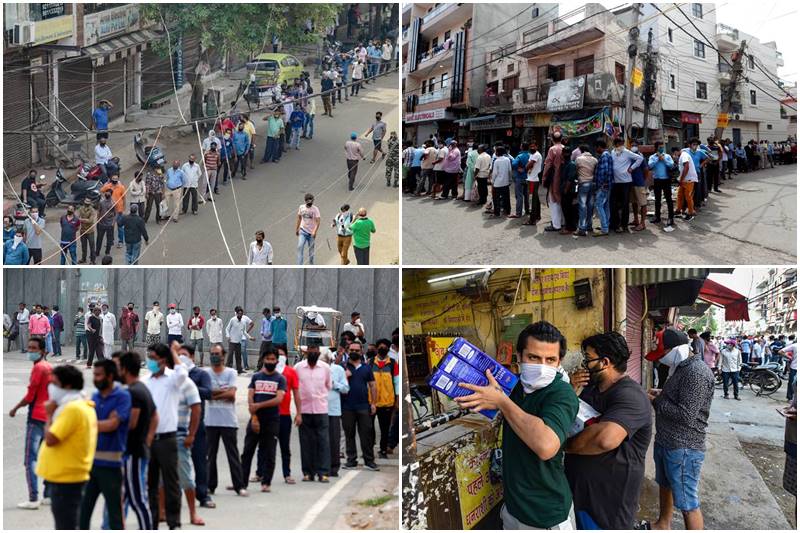
Link: https://anchor.fm/saakshi-sharma/episodes/Alcohol-shops-reopening-in-lockdown-3-0-eeg924
Image Courtesy: @TheFinancialExpress
By Saakshi Sharma
Link: https://anchor.fm/saakshi-sharma/episodes/Alcohol-shops-reopening-in-lockdown-3-0-eeg924
Image Courtesy: @TheFinancialExpress
By Padma Dolma
Every one wants a life for themselves and for that they pay a price, a piece of their life, a precious time, a valuable contribution.
Just like us. Every student of Ladakh has a dream of studying outside the town and I guess I’m also one of them.
Like every year the migrant birds Go to migrate to places they go for the summers and go back to place of their winter residents, we are just like them, we travel every year back to hometown in summers and stay in other cities in winters or any other seasons other than the summers.
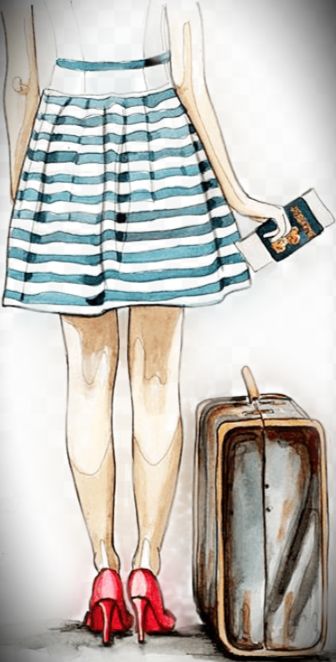
I come back to my hometown during summers and realizes that the traveling and migrating from place to place at a specific period of the year I had to return back carrying a luggage which is my ultimate cupboard, my closet,which is my only companion in traveling back and forth. Its quite lucky for those who have their own permanent cupboards and closets to decorate all to themselves, unlike me and any other kid from Ladakh. We only come back twice or thrice a year and sometimes never in a few years.
For what?
To achieve the dream and to live in that dream we have to pay the price of staying away and carry our closets all along with us whenever we are summoned back and forth. I wish it was Hogwarts where I’d go, and if it was Hogwarts I’d gladly leave my house without any regrets, but unfortunately we go out in a cruel world where people are more dangerous than Voldemort, we really can’t live a normal life unlike any other big city kid who envies us for having the permission of staying out, doing shopping for ourselves, traveling alone, in other words they just like the freedom we have of staying away from our parents which they don’t have now. But I see it in a different angle where we become vulnerable sometimes being mature or acting like one.
I’d say we have to become mature at a very young age to look after our own mess. The torment of living alone without parents by ones side is not a thing that anybody can bet with.
But they obviously don’t know about the behind the scenes life, as every attractive world looks beautiful, shiny and tempting from outside but inside struggles are the real thing which is a fact they don’t know about yet.
For me at first I enjoyed the freedom, truth to be told, but later I missed my old life where I don’t have to worry about the bill payments and there deadlines. That is something which we have to do when we are actually independent but for us being financially dependent on our parents yet we are independent in our own ways.
So, I envy those who really don’t have to worry about such things at the age of 15-20, but also we’ve become mature quickly on such terms when we have to live alone and don’t have anyone to look after our needs.
Sometimes I broke down, sometimes I cry and no one can understand my struggles other than me myself, so I learned how to get up even when I fall deep down in the world which I’ve created in my own mind because it’s me and only me who can stand up for myself that’s how I’ve learned to live this long struggling, learning and standing up for myself.
That’s what we do, don’t we?

Image courtesy: PNG fuel

By Saakshi Sharma
Amazon fire TV stick is a digital media streamer recently launched by the Amazon network.
Its a whole new upgrade to the experience of watching TV as earlier on the benefit of VOD or video on demand could be availed only by those who had a smart TV but now anyone can convert their television set into a smart one by just plugging in the fire stick, provided it has an HDMI port.
It is a great replacement for cable or set up box.

Apart from streaming videos of your choice, it also allows you to play music, games, install apps, browse the web and a lot more.
Another magnificent feature of this product is the voice enabled remote. The remote comes pre-installed with Alexa that helps you to find the titles you’re looking for without typing and just saying it out. Costing around Rs.5999/-, looking at the amount of features the company is offering, its a great add-on to any home.
Image Courtesy: @amazon.in

By Saakshi Sharma
Collateral Beauty is an American-drama film released in 2016 starring Will Smith, Edward Norton, Keira Knightley, Michael Peña and many more.
Though it was released almost four years back, it holds a very important message. It is a masterpiece that shows how beautiful grief could be.
It’s an emotionally heavy film that is based on the whole motto of connecting love, time and death.
The movie says these are the three basic elements that connect all the human beings to each other around the world as we long for love, wish we had more time and fear death.
The story starts with a grieving Will Smith, who has recently lost his child, writing letters to the universe, demanding answers from the cosmos to explain why he had to suffer through such an unbearable tragedy. As his friends and colleagues see him wasting his life away while dealing with their own problems, they plot a plan in order to deem him unfit in front of the board members to gain control of the company which they all started together.
Unaware of the plans universe has for them, while trying to pull their friend out of his misery, they heal themselves along the way too.
This movie beautifully portrays that there’s no timeline to get over the grief someone you loved so deeply but time does eventually heal all and even the most hideous of the circumstances have their own collateral beauty!
Image Courtesy: Hbowatch.com

By Saakshi Sharma
Podcast on Clean India Campaign.
Link: https://anchor.fm/saakshi-sharma/episodes/Clean-India-Campaign-ee7bto/Clean-India-Campaign-a27ql7a


By Samyukta Narayanan
https://anchor.fm/gyannloaded/episodes/MGNERGA-2005-ee4krg/MGNREGA-2005-a277luo
By Padma Dolma

COVID-19 Quarantine period has kept the people away, not only from the people they admire but also from their jobs, livelihood, hometown, home, family, love, but the virus had transmitted day by day through out the country like a monsoon strom travel and come forth all together and distorts the city. The SHAMIK TRAIN had got a hope on them, the one who are away from their loved ones.
This whole two months they had suffered going back to their respective hometowns. Their sufferings had answered them, these trains had ranned on the tracks from last month for the migrant peasants to travel back home. When the lockdown was imposed by the PM, these people had no where to go, no jobs to earn money, no food to eat, not even a shelter to sleep. The states borders were sealed and no one was allowed to travel inter state.
When the SHAMIK TRAIN was on the move half of the battle was won and half was with the deadly virus which had infected more than a million people worldwide. Total 642 trains had made it to nearly 8 lakh people to their homes. 100 trains run everyday, carrying 54 people in each in 24 coaches having 72 seats to maintain social distancing. Guidelines of the train is online and the ticket fare is 90% discounted, services has been shared on a 85:15 ratio with states.
While the railways has not yet announced the cost incurred on the special services, the officials indicate that the national transporter has spent around ₹80 lakh per service.
By Simran Kaur
This coffee maker has all you need to make a perfect cup of coffee.
Description –
1) On/off indicator light lets you know when your coffeemaker is on or off.
2) Removable filter basket lifts out for fast and easy filling
3)Cleaning Brewing pause and serve lets you pour a cup of coffee while the coffeemaker is still brewing 4)Dual water window shows the amount of water in the reservoir for accurate filling.
5) Stain Resistant Warming Plate is easy to clean and prevents staining
6 months manufacturing warranty (off-site).
Features And Details:
1) Capacity 4-6 cups (0.6 L)
2) Power 600 W Power Supply 230 V, 50 Hz
3) Anti-drip function Light on indicator, Plastic is food grade plastic certified.
4) Removable reusable filter System temperature maintenance
5) Drip free carafe
6) Easy to clean
7) Dry boil protection
8) Brewing pause and serve Function

By Muskan Mehndiratta
Andaman and Nicobar Islands (A&N Islands) are a union territory of India. They lie towards east of the Indian mainland in the Bay of Bengal (6º to 14º north latitudes and 92º to 94º east longitudes) and the 572 islands of the archipelago appear like emerald beads strewn in the blue sea. The average distance between the A&N Islands and Indian mainland is 1200 kilometres (km). On the west lies the Bay of Bengal that separates it from mainland India and in the east is the Andaman Sea, on the other side of which lies Thailand. The Preparis North Channel on the north and the Great Channel on the south demarcates the boundary between A&N Islands and Myanmar and Indonesia respectively. A&N Islands consists of two archipelagos, the Andaman Islands and the Nicobar Islands. The two groups are separated by the Ten Degree Channel named so because it lies at the 10º N latitude. Out of the 572 islands, only 38 islands are inhabited. The Andaman archipelago is the larger one and covers an area of 6408 square kilometre that is 78 per cent of the total area of the archipelago. The Nicobar archipelago has an area of 1840 square kilometre has that accounts for the remaining 22 per cent. Total population of A&N Islands is 380,581. Of this total Andaman Islands and Nicobar Islands account for 90 percent and 10 percent respectively. The administrative headquarter is Port Blair with a population of 0.13 million. The Nicobar District’s headquarter is at Car Nicobar.The population of A&N Islands can be divided into two groups – non-tribal population and the tribal population. The non-tribal population came to A&N Islands, when the British colonized the Andaman Islands in 1858 and later the Nicobar Islands in 1869. The non-tribal population grew rapidly after the Independence in 1947 when the “refugee” families were “resettled” under various schemes from 1947 to 1980. The non-tribal population consists of mainlanders, who were “settled” in A&N Islands over the last 158 years. They account for 92.66% of the total population. The tribal population constitute the remaining 7.34% of the total population. There are in all six tribes, four in Andaman Islands and two in Nicobar Islands. The Nicobarese, account for 97.2% of the total tribal population of A&N Islands and the rest of the five tribes account for the remaining 2.8%. The tribes of A&N Islands are scheduled tribes.

It is safe to say that the original population of the Andaman and Nicobar islands consist of aboriginal indigenous people, i.e. tribal people. They have been dwelling in the forests and jungles of the islands for centuries, lead a hunter-gatherer lifestyle, and appear to have lived in substantial isolation for thousands of years. The so called “civilians” or city/town dwellers only came later, earliest a few hundred years ago. The Andamanese and Nicobarese can be split into two broad tribal groups mainly based on their place of origin. The Andaman Islands are home to four ‘Negrito’ tribes where as – the Great Andamanese, Onge, Jarawa and Sentinelese. Where as the Nicobar Islands are home to two ‘Mongoloid’ tribes – the Shompen and Nicobarese. The ‘Negrito’ tribes are believed to have arrived in the islands from Africa up to 60,000 years ago. All are nomadic hunter-gatherers, hunting wild pig and monitor lizard, and catching fish with bows and arrows. They also collect honey, roots and berries from the forest.The ‘Mongoloid’ tribes probably came to the islands from the Malay-Burma coast several thousand years ago.
The Great Andamanese:
The great Andamanese is a collective term used for 10 different tribes that lived in most of the large islands in the Andaman. These tribes spoke different but related languages were of Negrito origin and were related by culture and geography. Until the late 18th century, the Andamanese peoples were preserved from outside influences by their fierce rejection of contacts (which included killing any shipwrecked foreigners) and by the remoteness of the islands. But after the coming of the British, things changed.When the British first tried to enter the island in around 1788-89 the Andamanese tribes, with their total population of 5000-8000, were able to resist them, resulting in the British to move to Port Conwallis and withdraw from all attempts to obtain Port Blair and Ross island for about 60 years.
However they made another attempt to capture Port Blair in 1858 and succeeded, only to be met by the soldiers of the great Andamanese tribe in 1859. The battle between the great Andamanese and the British regime is known as ‘The Aberdeen war’. The tribe organized a well planned attack on the high ranking british officials but they were betrayed by an escaped convict Dudhanth Tiwari who had lived with the tribals for several months.As a result of the betrayal, the great Andamanese suffured heavily. They were fighting with bows and arrows against guns and artillery. Most of the young male population was killed in the battle. Population dwindled as and threatened the genes for the future survival of the tribes. Imported diseases, to which the islanders had no immunity further effected population and by 1901 only 625 great Andamanese were left.
They shifted base to Straight island and that is where they live today. Today only two tribes (Jeru and Bo) remain in significant number; the other 8 have been mostly extinct. The cultural and linguistic identities of the individual tribes have largely been lost; their members now speak mostly Hindi. Although the Great Andamanese on Strait Island still obtain some of their diet from hunting, fishing and gathering, they now consume rice and other Indian food, and are dependent on support by the Indian government for survival. They now practice some agriculture, and have established some poultry farms.
Onge:
Onges are one of the most primitive tribes in India. They belong to the Negrito racial stock and they have been mainly seen near the Dugong creek in Little Andaman. They are dependent on the food provided by nature and are a semi-nomadic tribe.
The onge population fell post british colonization from 672 in 1986 to 92 in 1901 but has remained stable since. At present the Onge population have opened up to the locals in the island. They have now experienced the impact of outsiders, as efforts at befriending them have proved successful. They have been provided with pucca houses, food, clothes, medicine etc. by the Administration. They eat turtle, fish, roots and jack fruits etc. They have developed artistry and crafts. The Onges can make canoes. A primary school has also been functioning at the Dugong Creek settlement of Onges. The population of this tribe is stable and is at present 110. A major drawback is the addiction of the Deugong mails to alcohol. 6 deaths have been reported because of this already. Enquiries into ways of controlling this addiction are taking place.
Jarawa:
With a population between 250 to 400, the Jarawa tribe is one of the largest tribes in Andaman islands. For centuries this tribe has shunned all interaction with outsiders and therefore there name means “The hostile ones” or “people of the earth”.
The Jarawa are still at the primitive stage of life on earth. They entirely depend upon forest and sea for food. Wild boar and monitor lizard are consumed. Various kinds of fruit , honey and tubers are parts of their diet too. The jarawas of both sexes go complete naked. However some ornaments made with shells and palm leaves are worn by them but these are not in the sense to cover their nudity. This tribe has lived in the southeast part of Andaman but after the British regime they shifted to the western region of the island. They have forever been hunter gatherers in the true sense however things have changed since the 1990’s specially after the building of the old trunk road. The great Andaman trunk road is a 360 km long road that connects Port Blair to the western regions of Andaman. Though it proves beneficial for tourism and business, it has proved life-threatening for the Jarawas. This trunk road cuts through the jungles that are home to the Jarawa community.
Sentinelese:
The Sentinelese people are said to be so hostile that their home has been named the ‘hardest place to visit’ in the world. They inhabit the North Sentinel island, and are the only remaining tribe in the Andamans to still maintain their isolation from the rest of the world. Nobody knows exactly how they look, the population or how they live. Since 1967, the indian governments with the help of anthropologists have tried to make contact with the tribe. They tried giving gifts of food, coconuts, etc but they were always met with hostility. The tribe showers arrows and stones at whoever comes near the island. In 2006, 2 fishermen who were fishing illegally near the island were shot by sentinilese archers. The helicopters which was sent to retrieve the bodies was also greeted by arrows. After the tsunami the government again tried to help them by sending a few employees to the island with gifts but again, the same response followed. Presently the policy of the indian government is to leave the Sentinilese alone. Any access to North Sentinel island is strictly forbidden.
 Gyann Loaded